Photo by David Mollison
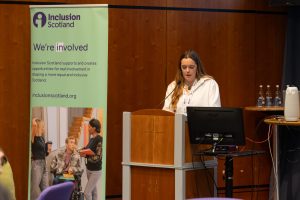
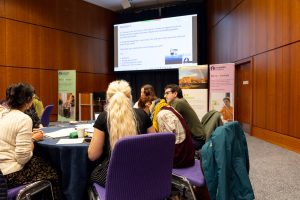
In the 2025 Disability Equality Plan, the Scottish Government outlined the need to ensure that emergency planning is appropriate, accessible and timely for disabled people in times of crisis. This workshop was a key step for the disabled community to get together, both in person and online, to discuss their views on this topic and help to influence the Scottish Government’s climate and emergency planning policies going forward.
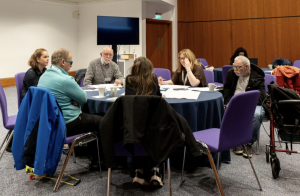
During the workshop, we were divided into breakout groups and asked the following questions:
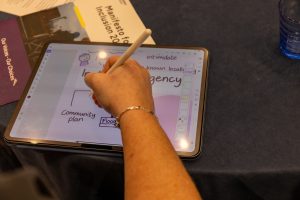 Examples of appropriate plans include ensuring an accessible evacuation strategy; creating a centralised and networked register for emergency services (including disabled people’s organisations, charities, the army and 999 services); prioritising reconnection of power during events and finding suitable alternative accommodation when relocation is required. Our conversations also highlighted that a return home after an evacuation should be safe and fit for purpose.
There was great interest in the creation of a network of disabled activists, and the event organisers are keen to hear from anybody interested in getting involved.
As University of Dundee PhD Researchers in Augmentative and Alternative Communication futures (Fin) and designing equitable resilience adaptations for disabled and elderly people (Elaine), we found this event extremely exciting. The views of attendees reflected current research – that meaningful change should be defined and led by the individuals who it will impact. It was fantastic to network with the event organisers and attendees to further our understanding in this important area.
With many thanks to the event organisers for an excellent day and to the other attendees for their open and honest conversations. We can only hope that these conversations continue and expand to include more disabled people from various walks of life across Scotland.
If you are interested in this topic, then please do reach out to the organisers and let us work together to prepare for a more equitable future for disabled people.
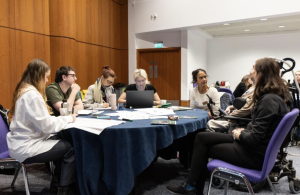 Photo by David Mollison
We – Elaine and Fin – are part of the Dundee University-based Leverhulme Doctoral Centre for Regenerative Innovation, which is an “active group of research students from different fields, working together across multiple disciplines to develop new regenerative theories and practice to help build a better future for the planet”. Both of us are seeking mentors to guide and support us through our research, as well as participants for workshops and research groups, so please do get in touch if you would like to find out more about either of our projects.
For more about our research, please get in touch: REGNR8-I PhD Scholarship Programme. Fin Tams-Gray: 180012695@dundee.ac.uk, Elaine Paterson: 2704987@dundee.ac.uk.
Network for climate action
If you are a disabled person interested in joining a network for climate action, please get in touch:
Maia Pace – Policy and Research Officer, Inclusion Scotland: info@inclusionscotland.org.
 References
[1] Audit Scotland (2025) Flooding in communities: Moving towards flood resilience
[2] Adaptation Scotland (website accessed 20 November 2025) Scotland and climate change
[3] Harvard University (2025) Disability in a time of climate disaster
- It is 20 years into the future and there is a flood in your area. You and your loved ones are safe. How have your needs been met to keep you safe?
- What can people in charge of emergency planning learn from you as a disabled person?
- Would you be interested in being involved in a network of disabled climate activists? If so, what would you want to see from this network?